The circulating water baths has functionality with advanced temperature control technology. Its heater system includes stable thermal consistency, whereby each sample in the chamber undergoes equal heat exposure. The circulating water baths enables precise temperature setting and adjustments with an easy-to-use digital control panel. Its stainless-steel tank includes superior corrosion resistance and chemical reaction resistance. With built-in protection features such as thermal cut-off and water level sensing, the circulating water baths is all about performance and protection. It is best for regular lab applications and for certain scientific applications.

Employed extensively in life sciences, environmental testing, and industrial R&D work, the circulating water baths promotes even heat for sensitive operations. Employed to enable laboratory operations that include heating reagents, culture incubation, and biochemical reaction maintenance, the circulating water baths is applied in environmental studies for sample conditioning and temperature-related analysis. With a stable thermal response, it minimizes experiment-to-experiment variability. From applications in work done for instruction to research-level work, the circulating water baths provides a dependable heat environment that enhances the integrity of lab investigations.
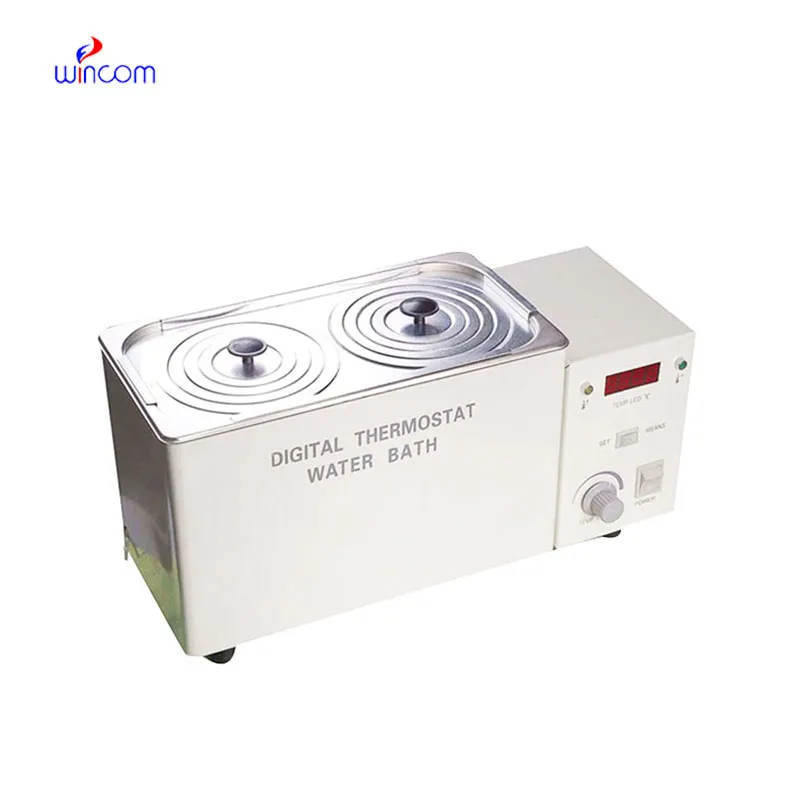
With advancing laboratory technology, the circulating water baths will also upgrade with increased performance and connectivity. The addition of artificial intelligence will enable predictive temperature control with automatic adjustment by experiment type. Data storage capacities will enable precise records of temperature histories for ensuring compliance and reproducibility. Energy-saving properties will also be added to the circulating water baths. Its advancement will be necessitated by the need for precision, ease, and sustainability in the current research settings.

Regular maintenance keeps the circulating water baths in good operating condition. Drain the tank every now and then and clean the interior with gentle soap and warm water. Clean well to prevent residue. Never use rough chemicals which will rust inner linings. Inspect check controls and the power cord for wear and tear, and maintain ventilation openings unobstructed. Calibration checks provide continuous temperature accuracy. Throughout normal maintenance, the circulating water baths will provide precise and reliable heat for lab testing and research.
The circulating water baths is a heat-controlled device from which researchers are able to maintain specimens at specified temperatures. The efficient heat transfer process of the device allows for uniform temperature throughout the chamber. In life science, chemistry, and food testing facilities, the circulating water baths is generally used in the processes such as sample incubation and reagent melting. With a strong focus on precision and safety, it has top-of-the-line thermal control to offer stable performance in a variety of different research settings.
Q: What types of laboratory work benefit from using a water bath? A: Water baths are used in microbiology, chemistry, and biotechnology for incubating samples, warming reagents, and melting substances safely. Q: How can contamination be prevented inside a water bath? A: Cleaning the tank regularly, using distilled water, and covering the bath when not in use can significantly reduce contamination risk. Q: Is it safe to leave a water bath running overnight? A: It is generally safe for models with over-temperature protection, but regular supervision and adherence to manufacturer guidelines are strongly advised. Q: What causes uneven heating in a water bath? A: Uneven heating may result from improper circulation, incorrect water level, or malfunctioning heating elements. Q: Why is it important to monitor the water level in a bath? A: Maintaining an adequate water level prevents damage to heating elements and ensures consistent thermal contact with the samples.
We’ve been using this mri machine for several months, and the image clarity is excellent. It’s reliable and easy for our team to operate.
The microscope delivers incredibly sharp images and precise focusing. It’s perfect for both professional lab work and educational use.
To protect the privacy of our buyers, only public service email domains like Gmail, Yahoo, and MSN will be displayed. Additionally, only a limited portion of the inquiry content will be shown.
We’re interested in your delivery bed for our maternity department. Please send detailed specifica...
We’re currently sourcing an ultrasound scanner for hospital use. Please send product specification...
E-mail: [email protected]
Tel: +86-731-84176622
+86-731-84136655
Address: Rm.1507,Xinsancheng Plaza. No.58, Renmin Road(E),Changsha,Hunan,China


 EN
EN
 af
af
 es
es
 ar
ar
 tr
tr
 sw
sw
 pt
pt
 th
th
 ur
ur
 bn
bn
 ne
ne
 vi
vi
 km
km
 lo
lo
 de
de
 ru
ru
 fi
fi
 nl
nl
 fa
fa
 fr
fr
 ko
ko