Being a crucial device for monitoring patients medically, the vital sign monitors offers a simultaneous ECG and vital signs display for patient evaluation. The apparatus aids in the acquisition of stable signals and the depiction of clear waveforms, which enable the medical personnel to keep track of the physiological trends very effectively. Its usage is not limited to one department only, but rather, it is found throughout the hospital where continuous monitoring and data review are done consistently during diagnosis, treatment, and recovery.

vital sign monitors is utilized in medical training contexts to enhance the practical education of healthcare professionals. During the actual or supervised clinical situations, the trainees are shown the ECG waveforms and vital signs in real time. This use case improves the clinical comprehension and also helps with the unification of monitoring practices in hospital training programs.
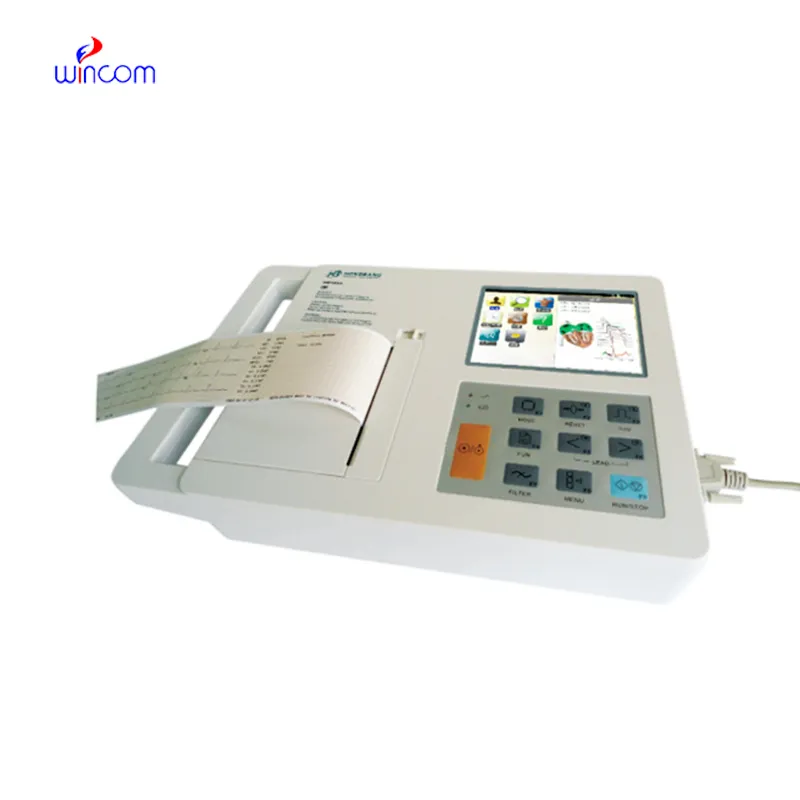
The future of vital sign monitors will be characterized by better data security and traceability features. The secure storage and limited access to ECG records will aid in compliance with regulations and the protection of patient data. Such advancements will support the credibility of digital monitoring systems in hospitals and clinical laboratories.
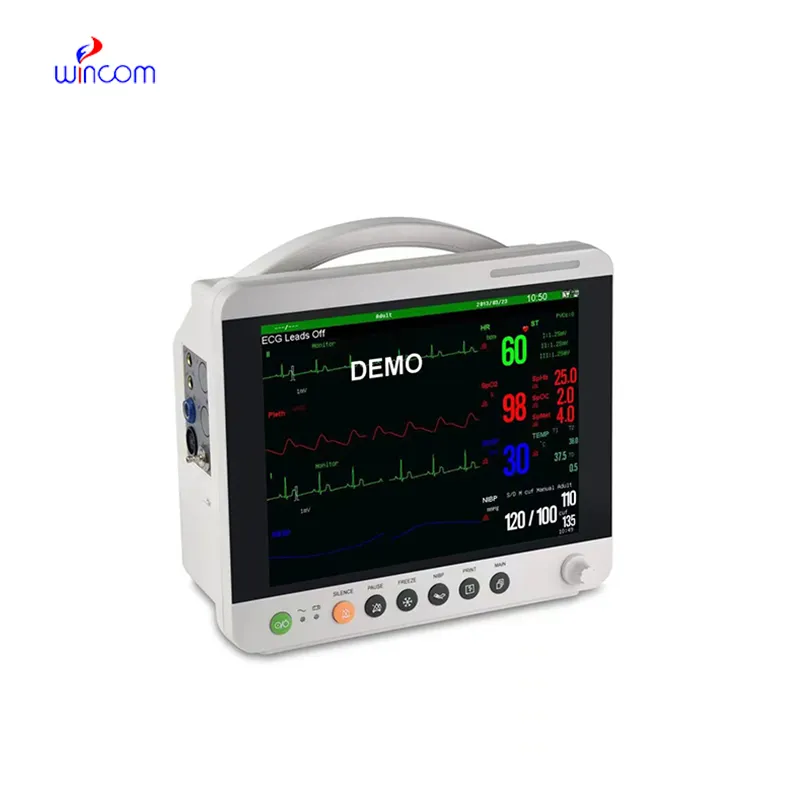
The process of maintaining vital sign monitors involves constant checking of electrode connections and lead quality. The hospital's standards helical the regular calibration checks, which in turn help to keep the ECG readings accurate. The batteries and power supplies in the equipment should be checked and replaced according to the need in order to avoid any unexpected power cuts. The mechanical stress on cables and sensors should be minimized by using appropriate handling techniques. Such periodic inspections together with controlled cleaning will make the healthcare teams to guarantee the reliability of vital sign monitors in patient monitoring, hence extending the lifespan of the equipment and at the same time supporting safe and efficient workflow in hospitals.
vital sign monitors finds its way in the neonatal and pediatric care units where accurate monitoring is necessary. ECG measurement helps doctors in keeping an eye on the fragile heartbeats of the little ones. Reliable signal acquisition allows continuous observation without any break. Its use not only boosts the trust in monitoring but also facilitates patient safety in the specialized hospital sectors.
Q: How often should ECG electrodes be replaced? A: Signal detection accuracy depends on the regular replacement of electrodes. Q: Can a Patient Monitor & ECG be used in neonatal care? A: Certainly, the use of specialized sensors allows safe monitoring of newborns and infants. Q: Does a Patient Monitor & ECG provide alarm functions? A: Alarms are indeed present, with notifications sent to the staff in case of abnormal heart rates or any other vital sign changes. Q: Can it record trends over time? A: It can indeed show historical data for patient analysis and clinical evaluation. Q: Is maintenance required for a Patient Monitor & ECG? A: Long-term performance and accuracy depend on regular maintenance and cleaning which are appropriate for the equipment.
This ultrasound scanner has truly improved our workflow. The image resolution and portability make it a great addition to our clinic.
I’ve used several microscopes before, but this one stands out for its sturdy design and smooth magnification control.
To protect the privacy of our buyers, only public service email domains like Gmail, Yahoo, and MSN will be displayed. Additionally, only a limited portion of the inquiry content will be shown.
We’re looking for a reliable centrifuge for clinical testing. Can you share the technical specific...
We are planning to upgrade our imaging department and would like more information on your mri machin...
E-mail: [email protected]
Tel: +86-731-84176622
+86-731-84136655
Address: Rm.1507,Xinsancheng Plaza. No.58, Renmin Road(E),Changsha,Hunan,China


 EN
 af
 es
 ar
 tr
 sw
 pt
 th
 ur
 bn
 ne
 vi
 km
 lo
 de
 ru
 fi
 nl
 fa
 fr
 ko